Sunday, May 20, 2012

Spring on the LES

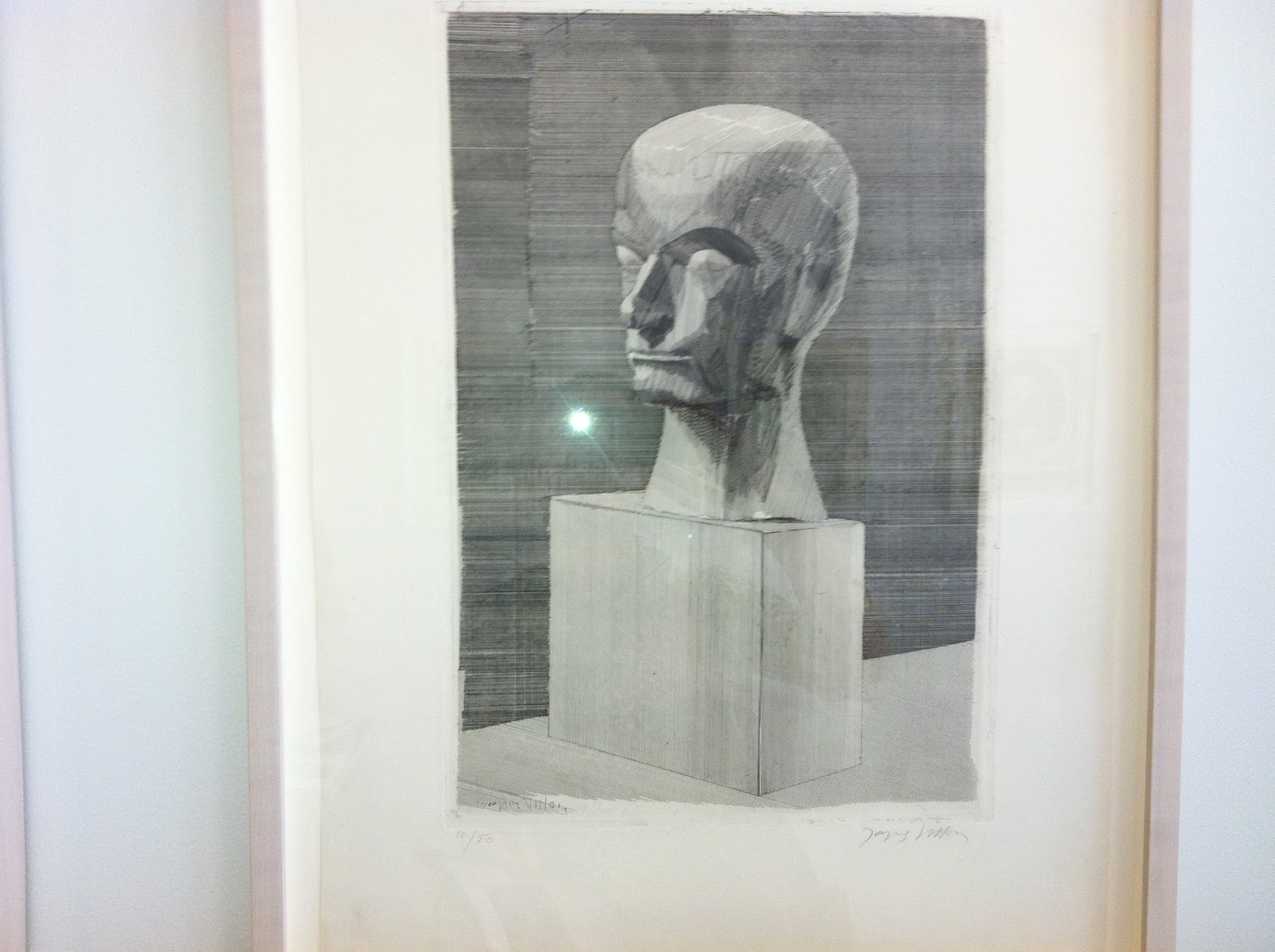
Villon, from a gorgeous show of prints at Pocket UtopiaPocket Utopia link

Is this Allison Schulnick? Downstairs at Dodge Gallery, from the very talented curator,
Janet Phelps' Twisted Sister exhibition
Link to Twisted Sister at Dodge


Julie Heffernan, Twisted Sister - an earlier work

Chantal Joffe at Twisted Sister, Dodge Gallery

Summer Wheat (I believe), Twisted Sister, Dodge Gallery

A perfect world: Judith Linhares, Twisted Sister at Dodge

Lorna Williams, a vagina dentata sculpture seen from above at an angle: Twisted Sister

Thick and Thin in Chelsea

Dana Schutz - a centerpiece painting at Petzel 


Detail, reminiscent in some ways of Malcom Morley, though smoother facture. 

Piano in the Rain - staccato beats of mark and melody.

A beautiful show curated by Barbara Takenaga at DC Moore:
l to r: Carrie Moyer, Jane South, Sarah Walker

Tom Burkhardt at DC Moore

Burkardt, closeup (paint on molded plastic)

Jutta Koether at Bortolami - the floor is gravel, in the deeper tones of the paintings

Jutta Koether at Bortolami

Koetter, detail

Chuck Webster at Ziehersmith - a little gem of a painting

Webster, side view--lots of prep with paint sliding to the finish

Lots of Dunham in this show, thick version

Chuck Webster

Jan Muller at Lori Bookstein

Jan Muller at Lori Bookstein

Jan Muller at Lori Bookstein

Muller detail - flying figures, green faces, halos, rainbows! 


Sunday, May 13, 2012

Back from Miami...

De La Cruz Collection Link

Miami and Beijing possess an abundance of private museum spaces.
The De La Cruz Collection, which focuses on sculpture, is truly gorgeous.

Sterling Ruby, from the fall duo with Lucio Fontana at Andrea Rosen
(link: http://www.andrearosengallery.com/exhibitions/2011_9_sterling-rubylucio-fontana/#)


Sterling Ruby, stalagmite and cloth painting
He was a TA for Mike Kelley at Art Center

Thomas Houseago, rear view (Houseago lives LA, as does Ruby)

John Pylypchuck (also lives in LA)
The clock on the wall piece is shaped like a head


Beautiful, long tears

The bedraggled aesthetic, seen close to--
Reminiscent of Kelley's stuffed animal works and the 1990s discussion on abjection:
a way to integrate the more vulnerable parts of the self.


Monday, May 07, 2012

If you're in Miami, please Join Me Friday Night May 11th, 6-9

http://www.dorschgallery.com

Incomplete Screen Capture, Dorsch Gallery Website


I'm excited for this show, to see Miami and reconnect with people there and to see my new paintings in the space. I'm also looking forward to exhibiting with Felecia Chizuko Carlisle and Michelle Weinberg. More and more the paintings feel like drawing, if one allows pours or flat, shaded areas to function as mark. There are drawings as well, which imagery repeats sometimes in the paintings. If you're in Miami, please come by and check it out.

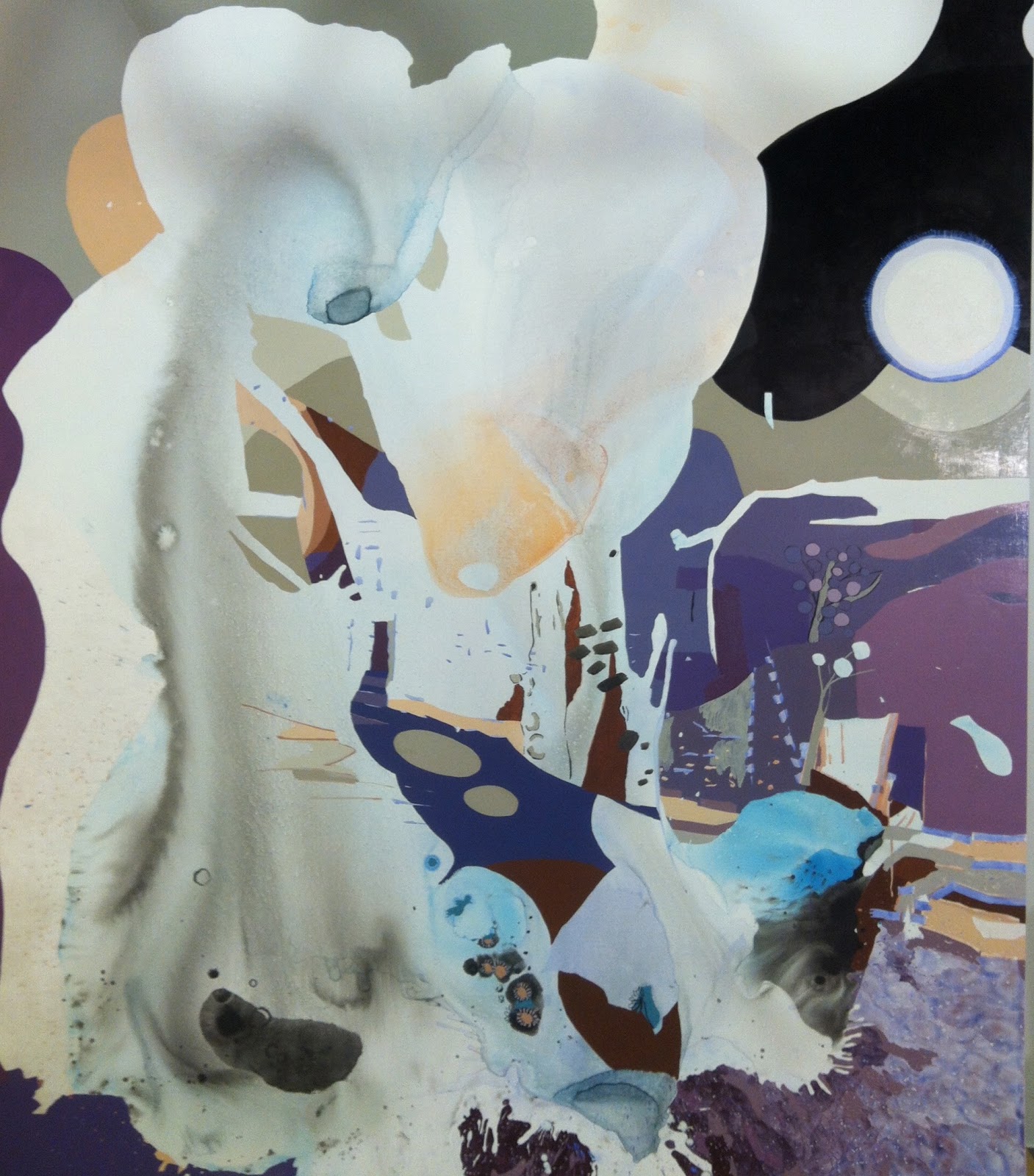
Preparing for a show is a sentimental process-I've taken to holding a canvas or two back as a continuation of the process and thinking that informs this group of work. It synthesizes many ideas in the last few years: pinstriped mountains, pattern, pours and Indian as well as Chinese brush techniques. At first I thought about landscapes like above, relatively straightforward pathways through space, but I got excited about constructing space from projected marks, and soon enough there were trees, mountains, a moon, more pattern.

Sunday, April 29, 2012

Pie in the Sky When You Die
Thomas Miccelli at Hyperallergic magazine

Thomas Miccelli's article (linked above) proposes that performance works are more highly valued than art objects, as the embodied encounter of a performer and audience member carries more psychic weight/exchange value than the art object's presence. This is one of many issues raised in the article, the result of a recent survey of artists and their earnings conducted by artist William Powhida.

It's no myth artists make art for the pure love of it; that's what keeps an artist working. Yet, there is a perception that support wouldn't, or perhaps shouldn't matter, as the artist would keep working. It's also no myth that without support it does become more difficult for an artist to continue. This is where the day job comes in, or whatever strategies the artist adopts to survive. The issue of sustenance, from Rubens' business acumen to Van Gogh's reliance on his brother, proposes an interesting discussion on the value of art and artists now.

A Dangerous Method, Cronenberg's recent film on Freud and Jung, recaptures the modernist ideal of an individual practitioner (Freud) who passes the torch of tradition to his metaphoric son, Jung. Their analysands bore witness in a reciprocal, if uneven, relationship. Does the advent of technology--film, gaming, performance, collectives, with their democratic ability to engage large groups of people as participants, alter the value of privileged, one-on-one communication and art objects? 

Enjoy the read!

Sunday, April 22, 2012

Walk With Me

Dorsch Gallery

iPhone image: acrylic on linen, 2012, 84 x 73 inches
Making paintings for Walk With Me, which opens May 11th, I ponder the fluctuating intake of an actual walk and what that's like, versus the speed of projected imagery. Painting is the way to slow images down. In the studio, a walk is reconstituted through the gesture, texture and color rhythms in painting. This may sound formal yet is anything but, as hours spent painting infuse the body with images and memories, like an extended stroll through time.  Reducing a construction shed to the barest notational markings, or flipping perspective into a topographical view reconstitutes the spatial logic of landscape as the unfolding of experience through memory.

From the great poet Wang Wei:

"Seated alone by shadowy bamboos,
I strum my lyre and laugh aloud;
None know that I am here, deep in the woods;
Only the bright moon comes to shine on me."

Thursday, April 05, 2012

Nightclubs on the Brain?

Notes on a Landscape 33, 2012, 12 x 9 inches

The FUN Fellowship
The writer Joan Wickersham suggested I make a list of nightclubs I used to frequent in LA since I talked about them so much. It got me thinking about the club years (the first foray was 1974 to  Rodney Bingenheimer's English Disco) and I am infusing this period of time into my work. Clearly, I am not alone--the link above, to the Museum of Art and Design, awards artists who enhance New York nightlife, a most worthy aim! and at Pulse Miami, 2011, Jane Hart had an exhibition of album cover collages from the 1960s and '70s at Available Space. Other artists are thinking about them too--who? And--does anyone have images from LA clubs between 1977 and 1981? Including pop-up clubs, like the Garage on Hope Street, before the museum was built?!

Saturday, March 17, 2012

Zaijien, Beijing

Hurtling west toward the International Date Line, I marveled at how digital coordinates help ground a traveler. Their Platonic grids and three-tone layers summon Sh'i Tao's and Philip Guston's definition of painting as a construction of the mind by embodying the landscape at 37,000 feet.

Thinking about the studio visits we made in Beijing, it seems expressionist artists focuses on process to elicit meaning, while academically trained artists conversant in Soviet and Chinese painting and sculpting techniques work with more message-driven meanings. This relates to but is not western; expressionism would relate to mood and musical composition, which can be considered hallmarks of imperial literati tradition; while message might relate to social consciousness and performance, hallmarks of the People's Republic.

Check out the artists below:

Bingyi Huang
http://www.bingyi.info/

 Wang Qingsong
http://www.wangqingsong.com/

Yang Qian
http://joannemattera.blogspot.com/2010/12/fair-enough-moola-riffic.html

Wednesday, February 29, 2012

Travelin'

New painting:18 x 24, acrylic on linen. Images and pours intersect as emblems of full and empty space. In this painting memories of places and their media images yield a mode of realization dictated through touch, whereas my physical presence in a particular place might inspire a more direct, even literal image. This re-enacts Chinese ideals that studio painting synthezes internal and external sensations, as a studio art. But whether in the landscape or observing it through projections and photographs, the idea is to move through painting, fusing image and gesture in the glances of passersby.

Wednesday, February 15, 2012

Conversations with I-Hsiung Ju

Professor Ju's website
"boneless" tree with outline flowers

plum blossom whiskers

plum tree practice, outline method
Double flower, outline method

Welcome to I-Hsiung Hu's instruction on the Four Gentlemen (bamboo, orchid, chrysanthemum and plum blossom). These idioms introduce the texture strokes that define Chinese landscape, and in so doing, provide elements of calligraphy and stroke order. I'm using I-Hsiung Ju's quartet of instruction manuals, purchased in a 2007 visit to his studio. The Four Gentlemen are dorky, but they are also fun and I am glad to have the thorough, step by step instructions and cultural background for the idioms that I-Hsiung Hu's books provide.

To copy the idioms and memorize the stroke orders is to immerse into a silent conversation with Professor Ju. He issues admonishing "don'ts!"to accompany images that transgress proper application. He wants to redirect focus from crossed branches, awkward downward facing flowers or rigid vertical compositions to alteration of placement, tone and mark. This requires much pre-planning: leaving space on branches to allow one to cross in front, be sure that heavy elements rise to weightlessness with the size and emphasis of the brush, or balance the ink load between dark and light, dilute and dry. The principle of alternity expands within landscape composition, deploying open/closed or host/guest relationships within a balance of empty and full. Way more conservative than the free-wheeling literati whose paintings continue to amaze and delight, Professor Ju nonetheless bestows readers, at least this one, the ability to 'read' Chinese paintings with knowledge. Our conversation is studded with exclamations (I wiped out! Stop saying don't!) and dawning recognition of previously hidden points, such as the distinction between composing and performing, which become philosophically profound.

Luo Ping, whose work was exhibited in “Eccentric Visions: The Worlds of Luo Ping (1733–1799)” at the Met in 2009, took plum to unprecedented levels of expression. Profusions of blossoms drip from flowing branches, rather than the minimal flower arrangements on jagged trunks Professor Ju instructs should be "ugly, pale and awkward." For Luo Ping's family, plum painting was their livelihood. Below, one observes an active shift from the performance role of execution to the composer role of innovator. Within the embodied process of painting, the two fuse together in seamless delight.
Tuesday, January 17, 2012

Dana Schutz Interview

Keith Mayerson skillfully interviews the incomparable Dana Schutz for the exhibition, "8 Americans," which he organized for Maruani & Noirehomme Gallery, September 10 - October 29, 2011 in Brussels, Belgium. Click on the link above to access the interview as well as others with Schutz and Mayerson's fellow exhibitors Hilary Berseth, Joe Bradley, Ann Craven, Francesca DiMattio, Wade Guyton and Jacob Kassay.

Sunday, January 01, 2012

Hawaii: Masterpieces of Landscape Painting from the Forbidden City

Honolulu Academy of the Arts exhibition - welcome!

More from the exhibition--this looks like Wang Meng

The final exhibition photo before museum intervention--cannot identify the gorgeous bamboo, rock and calligraphic composition to left--Wu Zhen?--see another image on museum website, linked above. How beautiful the ornamental doorway!
View from Moana Surfrider - like Chinese landscape...

Westin's Moana Surfrider hotel, founded 1901

Hawaii Botanic Garden

Hawaii Botanic Garden shoreline

Looking up at million year old Mauna Kea (13, 796 ft.) from the Saddle Road at about 6000 ft.  in Hilo

Public park in Hilo, island of Hawaii (all photos courtesy PM)
Leaving LA I flew east instead of west, missing the easiest way to see the once-in-a-lifetime exhibition at the Honolulu Academy of Art on view through January 8, 2012. A friend who just returned alerted me to it and forwarded these photographs; she'd taken a few of the show before a guard intervened and included some breathtaking images from the rest of her trip that create a sensitive and immersive exchange between painted and actual worlds. How hopping on a plane to see it beckons, right now, right away:  this is a major exhibition of Chinese scrolls, including the Four Yuan Dynasty Greats: Huang Gongwang, Wang Meng, Ni Tsan and Wu Zhen. The Yuan Dynasty was the first in China ruled by foreigners--learned culturati and government officials had the choice of working for the Mongols or retreating to private life (most chose the latter, as hermits in the mountains). These painters, and others, developed the literati tradition of painting initiated in the art-friendly Song Dynasty, first ruled by Emperor Huizong, himself an artist ultimately overtaken by the Jin Dynasty of Manchuria as he was too focused on painting to develop the military. Working collaboratively with the Jin, one of Huizong's sons later founded the Southern Song Dynasty, but tended toward poetry, along with painting and calligraphy the three beauties of ancient Chinese culture.
Lunch
In this delicious lunch of cabbage, tofu, enoki mushrooms and pork, an armchair traveler might discern volanoes, trees, plateaus and mountains surrounded by a porcelain moat, preserving Shih-Tao's dictum that "Painting is guided by the mind."